China said it ended poverty. Did it?
中国称已消除贫困。果真如此吗?
The country has lifted more than 700mn people out of indigence, but some doubt Xi Jinping’s claim that the mission is complete
这个国家已使超过 7 亿人摆脱了赤贫,但一些人质疑习近平关于任务已完成的说法
发表于 2026 年 3 月 9 日 /William Langley 发自贵州 - Financial Times
By most measures Yang Nai Yan Qing lives a frugal life. A member of China's Dong ethnic minority, the villager in her sixties resides in China's Guizhou province, one of the country's poorest, and reckons her monthly living expenses are less than Rmb200 ($29).
从大多数标准来看,杨乃艳清(注:本文采访的普通人皆为音译中文名)过着俭朴的生活。她是中国侗族的一员,这位六十多岁的村民居住在中国最贫困的省份之一——贵州省,据她估算,自己每月的生活开支不到 200 元人民币(约合 29 美元)。
Except on special occasions, such as the spring festival when she buys meat if she can afford it, Yang eats only mustard greens, cabbage and sweet potatoes, almost all of which she grows herself in a field a long walk uphill. Her other expenses are limited to cooking staples, clothing purchases every few years and medicine.
除了过年这类特殊日子——如果买得起的话她会买些肉——杨的饮食只有芥菜、白菜和红薯,几乎全是她自己在山上一块要走很远才能到的地里种的。她的其他开销仅限于油盐等做饭必需品、每隔几年添置一次的衣物,以及药品。
Yang's mode of living is supposedly a thing of China's past. At a ceremony in Beijing five years ago, Chinese leader Xi Jinping announced that extreme poverty had been eradicated in the country, claiming a "complete victory" and predicting that the "miracle would go down in history".
杨的这种生活方式本应已是中国的过去式。五年前,在北京举行的一场大会上,中国领导人习近平宣布全国绝对贫困已被消除,称脱贫攻坚战取得了「全面胜利」,并预言这一「奇迹」将「彪炳史册」。
But today the question is whether the victory that Xi boasted of is sustainable, or even borne out by reality, and whether China, the country that has lifted more people out of indigence than any other in history, is now underestimating the poverty in its midst.
但如今的问题是,习近平所宣称的胜利是否具有可持续性,甚至是否经得起现实检验;而作为人类历史上使最多人口摆脱贫困的国家,中国是否正在低估自身仍然存在的贫困问题。
China has a relatively low threshold for what constitutes poverty compared with other middle-income countries. And some experts doubt whether one of Beijing's key mechanisms for improving living standards — the relocation of millions of rural residents from their remote villages to urban housing — has achieved what was intended.
与其他中等收入国家相比,中国的贫困线标准相对较低。一些专家也质疑,北京改善生活水平的关键举措之一——将数百万农村居民从偏远村庄搬迁到城镇住房——是否达到了预期目标。
Xi's speech signalled the end of an eight-year campaign to bring the last remaining 100mn Chinese people above the poverty line, defined as earning an income of Rmb2,300 per year (about $330) at 2010 prices. Accounting for inflation and purchasing power, the threshold is significantly higher in dollar terms.
习近平的讲话标志着一场为期八年的脱贫攻坚战的落幕。这场运动旨在使最后约一亿中国人越过贫困线——该标准以 2010 年价格计算,定为年收入 2300 元人民币(约合 330 美元)。若考虑通货膨胀和购买力因素,这一门槛换算成美元要高出不少。
The drive was designed to finish a job started decades earlier by the Communist Party, the lifting of China's entire population out of destitution, a goal that saw more than 700mn people pushed over the poverty threshold in less than half a century.
这场运动的目的,是完成共产党在数十年前就已开启的事业——使中国全部人口摆脱赤贫。这一目标在不到半个世纪的时间里,使超过 7 亿人跨越了贫困线。
In one of the signature campaigns of Xi's early presidency, from 2013 to 2021 Beijing spent billions of dollars a year surveying citizens, tailoring anti-poverty strategies to tens of thousands of rural villages and building new infrastructure that transformed the appearance of China's remotest reaches, including Congjiang county, where Yang lives.
作为习近平执政前期的标志性运动之一,从 2013 年到 2021 年,北京每年投入数十亿美元,对公民进行摸底调查,为数以万计的农村量身制定扶贫策略,并大规模新建基础设施,改变了中国最偏远地区的面貌——包括杨所居住的从江县。
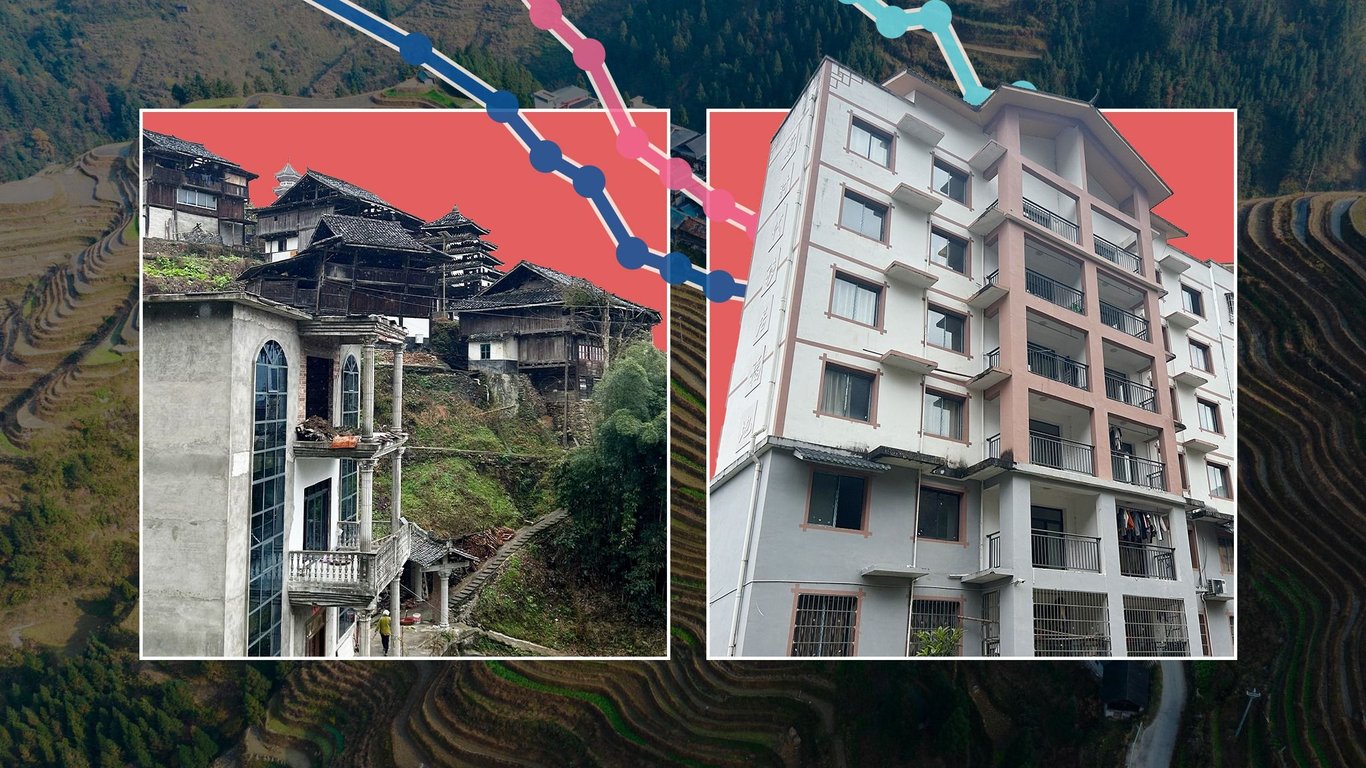
A concrete road now connects Yang's mountainside village to the rest of the county and many of her neighbours were relocated to newer apartment blocks downhill. But she says her life has barely changed.
如今,一条水泥路将杨所在的半山村庄与县城其他地方连接起来,她的许多邻居也已被搬迁到山下较新的楼房中。但她说自己的生活几乎没有变化。
"We grow all our own food, that way our expenses are minimal," Yang says as she hand-binds silver links into decorative chains for traditional Dong clothing — a job that can earn her Rmb3 per day when work is available. To meet her larger bills, such as her housing costs, she relies on remittances from male relatives who work in China's wealthier provinces.
「我们自己种所有的食物,这样开销就降到最低了,」杨一边说,一边用手将银链编成侗族传统服饰的装饰链——有活做时,这份工一天能挣 3 块钱。至于较大的开支,比如住房费用,她依靠在中国较富裕省份打工的男性亲属寄回来的钱。
In the five years since Xi's declaration, pandemic lockdowns, a collapse in China's property sector and stubbornly weak consumer demand have dented residents' ability to boost their incomes further. Meanwhile, growing indebtedness has hampered local authorities' ability to respond to economic shocks. The country set a growth target of 4.5 to 5 per cent for 2026 last week, its lowest range in decades.
自习近平宣布脱贫以来的五年里,疫情封控、中国房地产行业暴雷,以及持续低迷的消费需求,都削弱了居民进一步增加收入的能力。与此同时,不断攀升的债务也制约了地方政府应对经济冲击的能力。3 月 5 日,中国将 2026 年的经济增长目标设定为 4.5% 至 5%,为几十年来最低区间。
"It [eradicating poverty] was an incredible thing to try to do. And in nominal money terms, they did it," says Robert Walker, a professor at Beijing Normal University and an emeritus fellow at Green Templeton College, Oxford. But, he adds, lifting people out of poverty permanently "is sort of untenable".
「尝试消除贫困本身就是一件了不起的事。从名义货币角度来看,他们做到了,」北京师范大学教授、牛津大学格林坦普顿学院荣休研究员 Robert Walker 说。但他补充道,让人们永久脱贫「在某种程度上是不可持续的」。
"[Some] of the ways of lifting people out of poverty were inherently short term, driven by a poverty alleviation date, and intrinsically were not long-term solutions," he says.
「一些脱贫方式本质上是短期的,受脱贫时间节点驱动,从根本上说并非长久之计,」他说。
After 2021, some local officials and international organisations had hoped China would build on its successes by introducing a higher income threshold and a broader definition for what constitutes poverty, says Bill Bikales, lead UN economist in the country between 2019 and 2021.
2019 年至 2021 年间担任联合国驻华首席经济学家的 Bill Bikales 说,2021 年之后,一些地方官员和国际组织曾期望中国在已有成果的基础上,提高收入门槛,扩大贫困的定义范围。
Instead, Beijing's intense pride at having eradicated poverty is impeding its efforts to confront it. "Poverty is simply not a word that you use any longer other than talking about falling back into poverty or having eradicated poverty," Bikales says.
然而现实恰恰相反,北京对消除贫困的强烈自豪感,反而阻碍了其直面贫困问题的努力。「『贫困』这个词已经不再被使用了,除非是在谈论『返贫』或『已消除贫困』的语境中,」Bikales 说。
To build on its initial gains, says Bikales, China needs to update its definition of poverty, expand its welfare provisions and address the "yawning gap" in social services received by urban and rural residents. "China is now clearly falling short of what most of the world is doing in terms of addressing poverty," he says.
Bikales 说,要在已有成果的基础上更进一步,中国需要更新贫困的定义,扩大社会福利覆盖范围,并解决城乡居民在公共服务方面的「巨大鸿沟」。「在应对贫困方面,中国现在明显落后于世界上大多数国家的做法,」他说。
Chinese leaders' obsessive pursuit of the elimination of poverty dates back to the start of the post-Mao Zedong reform era. "Poverty is not socialism, socialism must eradicate poverty," former leader Deng Xiaoping said in the 1980s.
中国领导人对消除贫困的执着追求可以追溯到后毛泽东时代改革开放之初。「贫穷不是社会主义,社会主义要消灭贫穷,」前领导人邓小平在 1980 年代如是说。
It was partly a rejection of Mao's belief that poverty left people "poor and blank" — allowing them to be imbued with the revolutionary vigour that communism demanded.
这在一定程度上是对毛泽东观念的否定。毛泽东认为贫穷使人民「一穷二白」(「一张白纸,没有负担,好写最新最美的文字,好画最新最美的画图」)——从而更容易灌注共产主义所要求的革命热情。
The reform era heralded decades of breakneck growth and a massive wave of urbanisation. China's once agrarian population rushed to the megacities on the eastern coast to find jobs in construction and manufacturing.
改革开放时代开启了数十年的飞速增长和大规模城镇化浪潮。中国曾经以农业为主的人口纷纷涌向东部沿海的大城市,寻找建筑业和制造业的工作机会。
But even Deng conceded that some regions would have to "get rich first". The boom left millions of largely rural residents behind economically.
但即便是邓小平也承认,有些地区必须「先富起来」。这场经济繁荣将数百万主要是农村地区的居民甩在了后面。
By 2013, Beijing identified more than 80mn officially impoverished citizens living in 832 counties, mostly located in remote mountainous regions populated by members of ethnic minority groups. It swore to bring them above the official poverty line in time for the Communist party's centenary in 2021.
到 2013 年,北京认定有超过 8000 万官方标准下的贫困人口,分布在 832 个县,其中大部分位于少数民族聚居的偏远山区。政府誓言要在 2021 年中国共产党成立一百周年之前,使他们全部越过官方贫困线。
Experts agree that the ensuing efforts to pull each and every official "impoverished household" up were impressive. From 2014 to 2021, average disposable incomes for rural residents increased more than 80 per cent to above Rmb18,000.
专家们一致认为,此后为使每一户官方认定的「贫困户」脱贫所做的努力令人瞩目。从 2014 年到 2021 年,农村居民人均可支配收入增长了 80% 以上,超过 1.8 万元人民币。
Towards the end of the period, China proclaimed that it had removed the last nine counties, all located in Guizhou province, from its poverty list.
在这一阶段接近尾声时,中国宣布最后 9 个贫困县全部摘帽,这 9 个县均位于贵州省。
But while the country has eliminated poverty according to the World Bank's $3 per day income standard, its definition of poverty is much lower than what the lender considers poverty in an upper-middle income country such as China.
但尽管按照世界银行每天 3 美元的收入标准,中国已消除了贫困,其贫困定义却远低于世界银行对中国这样的中高收入国家所采用的贫困标准。
By 2022, more than one in five people in China remained in poverty according to the World Bank's definition for an upper middle-income country, set at $8.30 of income per day at 2021 prices.
根据世界银行对中高收入国家的贫困标准——以 2021 年价格计算日收入 8.30 美元——到 2022 年,中国仍有超过五分之一的人口处于贫困状态。
What is more, says Bikales, the UN economist, the list of people defined as impoverished in 2013 was focused on rural residents. It was also rarely updated, especially after Xi declared mission accomplished in 2021.
联合国经济学家 Bikales 进一步指出,2013 年认定的贫困人口名单聚焦于农村居民。而且这份名单很少更新,尤其是在习近平 2021 年宣布任务完成之后。
That static definition means that China's poverty measures fail to account for people not on the original list who have since slipped into poverty due to personal circumstances or subsequent shocks, such as the coronavirus pandemic, the property sector meltdown or havoc wreaked by a trade war with the US.
这种静态的定义意味着,中国的贫困衡量标准未能涵盖那些不在原始名单上、但此后因个人境遇或后续冲击——如新冠疫情、房地产暴雷、中美贸易战等——而陷入贫困的人群。
"This is how poverty evolves all over the world and China obviously is no exception," says Bikales.
「贫困在全世界都是这样演变的,中国显然也不例外,」Bikales 说。
"In Guizhou there are not three days without rain, no three fields without a mountain and no three coins in anyone's pocket," goes a much-quoted idiom about one of China's poorest provinces.
「天无三日晴,地无三里平,人无三分银,」这是一句广为流传的关于中国最贫穷省份之一——贵州的俗语。
The province's steep mountain valleys and a dearth of arable land have sharpened the challenge for policymakers seeking to boost incomes. Traditionally, its indigenous Miao and Dong people lived in wooden houses clinging to precipitous mountains above rushing river gorges, squeezing out subsistence incomes from their limited fields.
该省陡峭的山谷和匮乏的耕地,加剧了决策者提高居民收入的难度。历史上,当地世居的苗族和侗族人住在悬挂于险峻山崖上、俯瞰湍急河谷的木质吊脚楼中,从有限的田地里勉强维持温饱。
One of the most striking features of China's campaign against poverty was its relocation of millions of residents to higher-quality digs in more urban areas. The rationale was that poverty pertains not only to levels of income but also to living standards. People living in larger settlements would be able to find better-paid work more easily, the thinking went.
中国脱贫攻坚战最引人注目的特征之一,是将数百万居民搬迁到更加城镇化地区的较高质量住房中。其逻辑是:贫困不仅关乎收入水平,也关乎生活条件。政府的设想是,居住在较大聚居点的人们将更容易找到收入更高的工作。
By 2019, state media boasted that Guizhou had relocated more than five times the entire population of Iceland. The following year, China claimed it had resettled nearly 10mn people to alleviate poverty.
到 2019 年,官方媒体自豪地宣称,贵州搬迁的人口已超过冰岛总人口的五倍。翌年,中国宣布已为脱贫搬迁了近 1000 万人。
In Congjiang, officials have tried to make the most of the flat areas between the county's steep green mountains. In the town of Guandong, they have built hundreds of new mid-rise apartments, a new school and an array of industrial buildings designed to host food processing and logistics plants.
在从江,官员们试图充分利用陡峭青山之间为数不多的平坦地带。在贯洞镇,他们建起了数百套中层楼房、一所新学校,以及一批用于入驻食品加工和物流企业的工业厂房。
But Sister Wu, a 37-year-old Miao woman who was relocated to the area from the village of Zaisong three hours' drive away, says much of the investment is wasted.
但 37 岁的苗族妇女吴姐是从三小时车程外的宰送村搬迁到此地的,她说很多投资都打了水漂。
Wages in the local factories, many of which appeared empty when the FT passed by, are too low to justify working in them, leaving many unstaffed, and there was scant other employment in the local area, she says. Local officials suggested that she take up traditional handicraft work but the pay was just Rmb30-Rmb40 per day and the gruelling labour induces sharp pain in her neck.
她说,当地工厂的工资太低,不值得去干——英国《金融时报》记者路过时,许多工厂看上去空空荡荡、无人上班——而当地也几乎没有其他就业机会。地方官员建议她从事传统手工艺,但报酬只有每天 30 到 40 元,繁重的劳作还导致她脖子剧痛。
"What's good about it?" Wu, who asked to be identified by a surname and an honorific, says from near her resettlement complex. "Apart from being given a place to live, there's nothing else."
「有什么好的?」吴姐在她的安置小区附近说道,她要求以姓氏加尊称的方式被报道。「除了给了个住处,别的什么也没有。」
To make matters worse, Wu says that the authorities demolished her former home in Zaisong village after she moved to Guandong, an account repeated by multiple relocated villagers the FT spoke to in Guizhou. Now, as before resettlement, she remains reliant on remittances from her husband, who works in another province.
更糟糕的是,吴姐说,她搬到贯洞之后,当局拆掉了她在宰送村的老房子——在贵州,英国《金融时报》采访的多位搬迁村民都讲述了同样的遭遇。如今,和搬迁前一样,她仍然依靠在外省打工的丈夫寄钱过日子。
"Back home we had land to farm and vegetables to grow — there was always something to eat, and we only needed to buy a bit of meat," she says. "Here, we can only wait for him to give us money."
「在老家,我们有地可以种、有菜可以摘——总有东西吃,顶多买点肉就行,」她说。「在这里,我们只能等他寄钱过来。」
The resettlement complexes in Guandong show signs of wear, with multiple apartments appearing unoccupied. A seemingly abandoned pay-per-play children's amusement park dominates the space between one development and the local wet market. Some residents have taken to planting cabbage and other vegetables in the beds between apartment blocks.
贯洞的安置小区已显露出陈旧的迹象,多套住宅看起来无人居住。一座似乎已被废弃的投币式儿童游乐场占据了一个小区与当地菜市场之间的空地。一些居民开始在楼与楼之间的花坛里种起了白菜和其他蔬菜。
"There's nothing for the people who moved here to do: no land and no work," says Gu Lili, a seller of Dong jewellery and Guandong native who lives nearby.
「搬来这里的人没有事可以做:没有土地,也没有工作,」住在附近的贯洞本地人、侗族银饰商贩顾丽丽说。
She adds that many people left their villages so their children could attend the local schools but that they are now stretched, with teachers often in charge of multiple classes with more than 30 students each. "Lots of houses are empty . . . This place is too poor."
她补充说,许多人离开村庄是为了让孩子上当地的学校,但学校现在已经不堪重负,老师往往要负责好几个班级,每班超过 30 名学生。「很多房子都是空的……这地方太穷了。」
Guizhou governor Li Bingjun told the FT on the sidelines of China's rubber-stamp parliament in Beijing last week that rising unemployment nationally was "an issue that will be with us for the long term". Local officials were seeking to expand labour-intensive industries such as textile manufacturing to counter joblessness, he said.
贵州省省长李炳军上周在北京举行的中国橡皮图章式议会间隙对英国《金融时报》表示,全国范围内不断攀升的失业率「是一个将长期伴随我们的问题」。他说,地方官员正在努力扩大纺织制造等劳动密集型产业,以应对就业困难。
"The government, including state-owned enterprises, will try to provide as many job opportunities as possible," Li added. "We will make resolute efforts to ensure that no one falls back into poverty."
「政府包括国有企业,将尽可能提供更多的就业机会,」李炳军补充道。「我们将坚决努力,确保不发生规模性返贫。」
Elsewhere in Guizhou, officials have focused on developing new industries to aid in their fight against poverty.
在贵州其他地方,官员们将重点放在发展新产业上,以助力脱贫攻坚。
At the high-speed railway station in Rongjiang, a short 20-minute whizz through Guizhou's rugged mountains, a multicoloured phalanx of giant footballs greets visitors. The motif is ubiquitous throughout Rongjiang, which presents itself as the home of China's cunchao, or "village premier league", a grassroots rural football movement.
在榕江高铁站——从从江穿越贵州崎岖群山只需短短 20 分钟——五颜六色的巨型足球方阵迎接着访客。这一主题在整个榕江无处不在,这里以中国「村超」——即乡村足球超级联赛——的发源地自居,这是一项草根乡村足球运动。
The arrival of cunchao, which the authorities have promoted as an anti-poverty measure, has generated new income for the area, with local government boasting in state media that the league generated some 90 per cent of the county's Rmb9.6bn in GDP in 2023 thanks to an influx of tourists. The swish, floodlit cunchao stadium in the county town is surrounded by street-food stalls, brightly lit bars and restaurants.
当局将「村超」作为脱贫举措加以推广,它为当地带来了新的收入来源。地方政府在官方媒体上自豪地宣称,得益于大量游客涌入,2023 年「村超」为全县 96 亿元人民币的 GDP 贡献了约 90%。县城里那座灯光璀璨的「村超」球场周围,环绕着小吃摊、亮堂堂的酒吧和餐馆。
A poverty resettlement development is in notably better repair than its counterpart in Congjiang. There are several busy grocery stores and extensive outdoor sports pitches, one of which is being relaid. Red banners strung from walls in the complex extol the poverty-beating power of football.
这里的一处脱贫安置小区状况明显好于从江的同类项目。小区内有几家生意兴隆的杂货店和大面积的户外运动场地,其中一块正在重新铺设。小区墙上悬挂的红色横幅宣传着足球的脱贫力量。
Matthew Chitwood, a former Institute of Current World Affairs fellow who lived in the village of Bandong in Yunnan from 2017 to 2019 while it was undergoing its own anti-poverty drive, says going "all in" on specific industries was a feature of the poverty-alleviation campaign.
Matthew Chitwood 曾是当代世界事务研究所的研究员,2017 年至 2019 年间住在云南省邦东村,亲历了当地的扶贫攻坚。他说,在特定产业上「全力押注」是扶贫运动的一大特点。
In Bandong, local cadres helped villages to promote their locally grown tea to wealthy consumers on China's east coast and subsidised the replacement of corn crops with tea trees.
在邦东村,当地干部帮助村民向中国东部沿海的富裕消费者推销当地种植的茶叶,并补贴村民将玉米地改种为茶树。
"They were not just trying to create reliance on the government handouts . . . they were trying to generate economic opportunities," he says. But such investment can also create over-reliance, he warns.
「他们不只是在制造对政府补贴的依赖……他们也在试图创造经济机会,」他说。但他警告,这种投资也可能造成过度依赖。
"As one farmer told me: you can't eat your tea," he says, adding that when he made a return visit to Bandong following the Covid-19 pandemic, farmers had amassed tall stacks of unsold tea leaves in their home. "The market demand dried up."
「正如一位农民对我说的:你不能拿茶叶当饭吃,」他说,并补充道,新冠疫情之后他重返邦东村时,农民们家里堆满了一摞摞卖不出去的茶叶。「市场需求枯竭了。」
Back at the Rongjiang resettlement complex, Yang, a manager of a store selling children's toys and snacks in his sixties who only gave his surname, says the government gave his family of seven two apartments totalling 140 square metres. He rents the store for just Rmb350 per month.
回到榕江的安置小区,六十多岁的杨先生是一家儿童玩具和零食店的店主,他只愿透露姓氏。他说,政府给他一家七口分了两套总共 140 平方米的住房。他租下这间店铺每月只需 350 元人民币。
While business is slower than in previous years, it is better than his life working the fields in his village. "It's enough to get by. Before, when we lived at home, it was exhausting because we had no income . . . we did farm work every day until it got dark," he says.
虽然生意不如前些年,但比他在村里种地的日子好多了。「够维持生活了。以前住在老家,累得很,因为没有收入……天天干农活,干到天黑,」他说。
Other newcomers are having a rougher ride. Yang, the Dong woman in Congjiang, and other resettled villagers say that they receive no direct state support other than the new homes.
其他搬迁户的日子则没有那么好过。从江的侗族妇女杨和其他被安置的村民说,除了新房子之外,他们没有得到任何直接的政府扶持。
Their experience is typical, according to experts including Bikales, who say that China's anti-poverty drive was characterised by supply-side interventions such as investing in new homes and infrastructure, with little enthusiasm for the building of social safety nets, such as income subsidies, or for wider contributions to healthcare and education costs.
据 Bikales 等专家称,他们的遭遇具有代表性。这些专家指出,中国的脱贫攻坚运动以供给侧干预为特征——如投资新建住房和基础设施——而在构建社会安全网方面(例如收入补贴,或更广泛地分担医疗和教育费用)缺乏热情。
The problem is particularly acute in Guizhou, where decades of investment in underutilised infrastructure have made it one of the country's most indebted regions. After the anti-poverty campaign concluded, the pandemic devastated local government finances and a crackdown on the property sector hit land sales, a crucial source of revenue.
这一问题在贵州尤为突出。数十年来对利用率不高的基础设施的投资,使贵州成为全国负债最重的地区之一。脱贫攻坚运动结束后,疫情重创了地方政府财政,而对房地产行业的整顿又打击了土地出让收入这一关键财源。
The pressure on local government finances was laid bare last summer when severe flooding hit both Congjiang and Rongjiang, killing six people and damaging local infrastructure.
去年夏天,严重的洪灾同时袭击了从江和榕江,造成 6 人死亡并破坏了当地基础设施,地方政府的财政压力由此暴露无遗。
Pan, who runs a traditional textile mill in a village on the banks of the river outside Rongjiang's county town, says he moved to the area about four years ago after the property crisis meant work dried up in the construction industry.
潘先生在榕江县城外一个河边村庄经营一家传统纺织作坊。他说,大约四年前,房地产危机导致建筑行业无活可干,他便搬到了这里。
The area has changed significantly in recent years and he had managed to boost his annual income to about Rmb100,000. "Originally, this place was all just fields and farmland," he says, gesturing down the valley at a space now occupied by a floodlit football pitch and a rubbish dump.
这一带近年来变化很大,他的年收入也增加到了约 10 万元人民币。「以前这里全是农田,」他指着山谷下方说——那里现在是一片灯光球场和一个垃圾场。
Before the floods, Pan was slowly paying down the cost of his Rmb1mn initial outlay for his textile business. But it will cost him Rmb700,000-Rmb800,000 to replace the machinery ruined by the flooding, which spread to the upper reaches of his ground-floor factory. "It all got soaked," he says, gesturing at a huge pile of ruined cloth and a wrecked machine. "And the government didn't give a single cent."
洪水来袭之前,潘先生正在慢慢偿还他投入纺织生意的 100 万元人民币。但洪水漫入了他一楼厂房的上部,要更换被毁坏的机器,需要 70 万到 80 万元。「全都泡了水,」他指着一大堆报废的布料和一台损毁的机器说。「政府一分钱也没给。」
Additional contributions by Cheng Leng in Guizhou. Data visualisation by Haohsiang Ko in Hong Kong
Cheng Leng 在贵州亦有贡献。数据可视化由香港的 Haohsiang Ko 制作。
 Made with Bullet